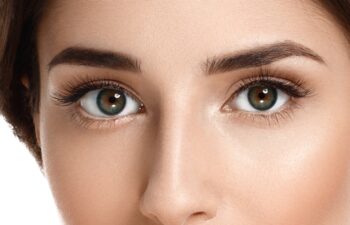
Blepharoplasty — eyelid surgery — is consistently one of the most requested procedures in facial plastic surgery, and consistently one of the least understood before the consultation. Patients often arrive with a general sense that they want to look less tired around the eyes, without a clear understanding of what blepharoplasty involves, which type they need, or what the procedure can and can’t address.
At Chesapeake Plastic Surgery, Dr. Haven J. Barlow brings more than 30 years of surgical experience — including his training as Chief at Johns Hopkins — to blepharoplasty consultations that begin with the right diagnosis before any surgical plan is made.
Upper and Lower Are Different Procedures
Blepharoplasty is not a single operation. Upper blepharoplasty and lower blepharoplasty address different anatomical structures, different aging changes, and different patient presentations. They may be performed together or independently, depending on what each patient’s specific picture requires.
- Upper blepharoplasty removes the excess skin of the upper eyelid that hoods over the lid — the ptotic tissue that makes the eye appear smaller, heavier, or older. In some patients, this excess skin is purely cosmetic; in others, it impairs peripheral vision and qualifies as a medically necessary procedure (with corresponding insurance coverage considerations). The incision is placed in the natural upper lid crease and heals to a thin, well-concealed scar.
- Lower blepharoplasty addresses the herniated fat pads beneath the eye that create the “bags” most patients associate with tired appearance, along with the hollowing of the tear trough that accompanies the fat prolapse. The approach may be through the inside of the lower lid (transconjunctival, for patients with good skin tone) or through a subtle incision at the lower lash line (transcutaneous, when skin removal is also needed).
What Blepharoplasty Doesn’t Do
Understanding what eyelid surgery addresses — and doesn’t — prevents the disappointment that comes from expecting the procedure to solve the wrong problem.
Blepharoplasty does not address crow’s feet — the lines at the outer corners of the eyes produced by the orbicularis muscle. Botox, not surgery, addresses dynamic lines.
Upper blepharoplasty does not address brow position. A heavy, low brow creates the appearance of hooding that may be more accurately attributed to the brow than to the upper lid. Operating on the eyelid of a patient whose actual problem is a descended brow produces a result that doesn’t address what the patient’s mirror told them was the issue. Dr. Barlow’s consultation specifically distinguishes between brow-related and lid-related upper eyelid heaviness — which determines whether blepharoplasty, a brow lift, or both is the appropriate recommendation.
How Long Results Last
Upper blepharoplasty results are long-lasting — the skin removed doesn’t grow back, and most patients enjoy their results for ten to fifteen years before the continued aging of surrounding structures warrants any additional consideration. Lower blepharoplasty results are similarly durable when the herniated fat is removed or repositioned; the fat that is addressed does not reconstitute.
The Recovery Timeline
Upper blepharoplasty recovery is relatively straightforward: sutures are removed at five to seven days, bruising and swelling largely resolve within two weeks, and most patients are comfortably social within ten to fourteen days. The incision heals along the natural lid crease and becomes minimally visible at several weeks, fading further over the following months.
Lower blepharoplasty, particularly with the transcutaneous approach, has a somewhat longer visible recovery — bruising and swelling may require three weeks to fully resolve, and the lower lid scar requires several months to fully mature.
The Consultation at Chesapeake Plastic Surgery
Dr. Barlow’s blepharoplasty consultations are noted for their thoroughness: an assessment of the eyelid anatomy, brow position, skin quality, fat distribution, and tear trough morphology that produces a specific, accurate diagnosis of what the patient’s eye area actually requires rather than a default to the surgery they came in asking about.
Patients served throughout Maryland and Northern Virginia have access to consultations at both the Annapolis and Vienna locations.
Insurance and Upper Blepharoplasty
Upper blepharoplasty occupies a unique position in plastic surgery in that it may be covered by health insurance when the drooping skin functionally impairs the superior visual field. Documentation through visual field testing — performed by an ophthalmologist or in some cases directly — establishes whether the degree of ptosis qualifies for medical necessity coverage.
Patients who are considering upper blepharoplasty for both functional and aesthetic reasons benefit from having this evaluation before the cosmetic consultation determines the plan. If functional coverage applies to a portion of the procedure, the financial landscape changes — and Dr. Barlow’s team is experienced in helping patients understand their coverage situation before planning proceeds.
The Anesthesia Conversation
Blepharoplasty is most commonly performed under local anesthesia with IV sedation in an outpatient setting. General anesthesia is not required and is not the standard approach. The anesthesia experience for most patients is significantly lighter than a procedure under general anesthesia, with a corresponding reduction in nausea, recovery time, and systemic impact.
The combination of local anesthesia precisely placed to numb the eyelid and IV sedation that produces a relaxed, comfortable, and typically amnestic experience means that most patients describe the procedure as far easier than anticipated. This is especially relevant for patients whose hesitation about blepharoplasty has included concerns about “going under.”
Schedule Your Blepharoplasty Consultation at Chesapeake Plastic Surgery
Dr. Haven J. Barlow and the Chesapeake Plastic Surgery team serve patients throughout Maryland and Northern Virginia at Annapolis and Vienna locations. Contact the practice through barlowmd.com to schedule your private consultation. The eyes are the first feature people look to when they read your age and your energy level — and the conversation about what’s possible starts with an accurate assessment of what’s actually happening.
Chesapeake Plastic Surgery’s Annapolis and Vienna locations serve patients throughout Maryland, Northern Virginia, and greater Washington DC. Contact the practice through barlowmd.com to schedule your private consultation.
This blog is educational. Blepharoplasty involves individual risks that should be discussed during a comprehensive consultation with a board-certified plastic surgeon. board-certified plastic surgeon.
Medically reviewed by Haven Jesse Barlow, M.D. on
Posted on behalf of