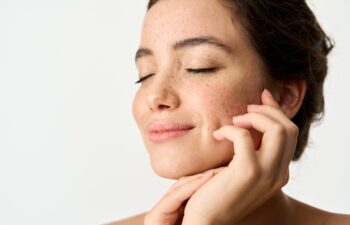
When most people think about facial aging, they picture wrinkles and sagging skin. But one of the biggest changes happens beneath the surface. Over time, the face gradually loses volume. Cheeks flatten, hollows appear under the eyes and at the temples, and the smooth contours of youth begin to look more angular and tired.
Many people turn to dermal fillers to restore that lost volume, and fillers can be a great option. But there’s another approach that uses your body’s own tissue to create soft, natural-looking results: facial fat grafting. At Chesapeake Plastic Surgery, Dr. Haven J. Barlow, MD, FACS, has more than 30 years of experience helping patients in Annapolis and Northern Virginia refresh their appearance. As a Fellow of the American College of Surgeons, he offers facial fat grafting as part of a comprehensive approach to facial rejuvenation.
Here’s what you should know about facial fat grafting and whether it might be right for you.
Why the Face Loses Volume With Age
In youth, the face is supported by well-distributed pads of fat that create full cheeks and smooth transitions between features. As we age, several changes take place:
- Fat Pads Shrink and Shift: Facial fat decreases and moves downward.
- Bone Changes: The facial skeleton gradually changes shape, reducing support for the soft tissues.
- Collagen Declines: Skin loses firmness and elasticity.
- Hollowing Develops: Areas like the temples, under-eyes, and cheeks may look sunken.
The result can be a face that looks tired, gaunt, or older than you feel, even if your skin is in good condition.
What Is Facial Fat Grafting?
Facial fat grafting, also called fat transfer, moves a small amount of fat from one area of your body to areas of your face that have lost volume. The process typically involves three steps:
- Harvesting: Fat is gently removed from an area such as the abdomen, flanks, or thighs using liposuction techniques.
- Processing: The fat is purified to prepare it for transfer.
- Injecting: Small amounts of fat are carefully placed in targeted areas of the face to restore volume and contour.
Because the fat comes from your own body, it blends naturally with your facial tissues.
Areas That Can Be Treated
Facial fat grafting can address a variety of concerns, including:
- Cheeks: Restoring fullness and lift to flattened cheeks.
- Under-Eye Hollows: Softening dark shadows and the transition between the lower eyelid and cheek.
- Temples: Filling hollow temples for a more youthful shape.
- Nasolabial Folds: Softening the lines from the nose to the corners of the mouth.
- Lips: Adding subtle volume.
- Jawline and Chin: Improving definition and contour.
Fat Grafting vs. Dermal Fillers
Both fat grafting and dermal fillers can restore volume, but they have different strengths:
- Longevity: Dermal fillers typically last months to a couple of years. Fat that survives the transfer can provide long-lasting results.
- Natural Material: Fat grafting uses your own tissue, while fillers use manufactured products.
- Treatment Area: Fat grafting can treat larger areas at once.
- Predictability: Fillers offer precise, immediate results. Some transferred fat is naturally reabsorbed, so results can vary.
- Downtime: Fillers have minimal downtime, while fat grafting involves a short recovery period.
Some patients start with fillers to “try on” added volume before choosing a longer-lasting option. Dr. Barlow can help you weigh the pros and cons.
Combining Fat Grafting With Other Procedures
Facial fat grafting is often combined with other procedures to create a more complete rejuvenation. It pairs well with:
- Facelift: A facelift lifts and tightens sagging tissue, while fat grafting restores lost volume.
- Neck Lift: Addresses loose skin and bands in the neck.
- Eyelid Surgery: Refreshes the eyes while fat grafting softens hollows.
- Non-Surgical Treatments: Skin treatments can improve texture and tone.
This combined approach addresses both sagging and volume loss for balanced, natural-looking results.
Are You a Good Candidate?
Facial fat grafting may be a good option if you:
- Have Facial Volume Loss: Hollowing in the cheeks, temples, or under-eyes.
- Want Natural, Long-Lasting Results: You prefer using your own tissue.
- Have Enough Donor Fat: A small amount of fat is needed for harvesting.
- Are in Good Overall Health: Healthy patients typically recover more smoothly.
- Have Realistic Expectations: Results develop gradually as swelling resolves.
Not everyone is a candidate. A consultation is the best way to determine whether fat grafting is right for you.
What to Expect During Recovery
Recovery from facial fat grafting is usually manageable. In general:
- Swelling and Bruising: Common in the face and donor area for the first week or two.
- Early Results: Some swelling may make the face look fuller at first.
- Settling Period: Some transferred fat is naturally absorbed over the first few months.
- Final Results: Results typically become more apparent after several months as the fat settles.
Because swelling fades over time, fall is a great time to have the procedure and enjoy refreshed results by the holidays or spring.
This blog is for educational purposes only and isn’t a substitute for medical advice.
Facial Fat Grafting FAQs
- How long do fat grafting results last? Fat that survives the transfer can provide long-lasting results, although natural aging continues.
- Will I need more than one session? Some patients benefit from a touch-up to achieve their desired results.
- Does fat grafting look natural? When performed carefully, results blend naturally with your facial features.
- Is fat grafting painful? Most patients report mild discomfort that can be managed with medication.
Restore Your Natural Glow at Chesapeake Plastic Surgery
If you’ve noticed hollowing or a tired look in your face, facial fat grafting may help you restore youthful contours using your body’s own natural resources.
Schedule your consultation with Dr. Haven J. Barlow at Chesapeake Plastic Surgery today. Visit our Annapolis office at 802 Bestgate Road, Suite A, Annapolis, MD 21401. Our Tysons office is located at 8100 Boone Boulevard, Suite 720, Vienna, VA 22182.
Medically reviewed by Haven Jesse Barlow, M.D. on
Posted on behalf of